<?xml version="1.0" encoding="utf-8" ?>
<rdf:RDF xmlns:rdf="http://www.w3.org/1999/02/22-rdf-syntax-ns#" xmlns:dc="http://purl.org/dc/elements/1.1/" xmlns:syn="http://purl.org/rss/1.0/modules/syndication/" xmlns="http://purl.org/rss/1.0/">


<channel rdf:about="https://kahea.org/search_rss">
  <title>KAHEA</title>
  <link>https://kahea.org</link>

  <description>
    
            These are the search results for the query, showing results 1 to 15.
        
  </description>


  <image rdf:resource="https://kahea.org/logo.png"/>

  <items>
    <rdf:Seq>
      
        <rdf:li rdf:resource="https://kahea.org/blog/kahea-begins-work-on-seabed-mining-issues"/>
      
      
        <rdf:li rdf:resource="https://kahea.org/blog/critcal-habitat-critical-discussion"/>
      
      
        <rdf:li rdf:resource="https://kahea.org/blog/ahi-feedlot-abandons-ship"/>
      
      
        <rdf:li rdf:resource="https://kahea.org/blog/monster-salmon-and-not-in-a-good-way"/>
      
      
        <rdf:li rdf:resource="https://kahea.org/blog/no-public-speaking-allowed"/>
      
      
        <rdf:li rdf:resource="https://kahea.org/blog/exempt-it-al"/>
      
      
        <rdf:li rdf:resource="https://kahea.org/blog/laughable-public-process-changes-to-conservation-protections"/>
      
      
        <rdf:li rdf:resource="https://kahea.org/blog/that-deafness-its-only-temporary"/>
      
      
        <rdf:li rdf:resource="https://kahea.org/blog/exemptions-gone-wild"/>
      
      
        <rdf:li rdf:resource="https://kahea.org/blog/pushing-for-the-protections-monk-seals-and-humans-need"/>
      
      
        <rdf:li rdf:resource="https://kahea.org/blog/a-little-explanation"/>
      
      
        <rdf:li rdf:resource="https://kahea.org/blog/antifouling-causes-paler-fish"/>
      
      
        <rdf:li rdf:resource="https://kahea.org/blog/thousands-march-against-fish-farms-in-b-c"/>
      
      
        <rdf:li rdf:resource="https://kahea.org/blog/state-finally-getting-it-right-for-northwestern-hawaiian-islands-ish"/>
      
      
        <rdf:li rdf:resource="https://kahea.org/blog/reading-edible-hawaiian-islands"/>
      
    </rdf:Seq>
  </items>

</channel>


  <item rdf:about="https://kahea.org/blog/kahea-begins-work-on-seabed-mining-issues">
    <title>KAHEA begins work on seabed mining issues</title>
    <link>https://kahea.org/blog/kahea-begins-work-on-seabed-mining-issues</link>
    <description></description>
    <content:encoded xmlns:content="http://purl.org/rss/1.0/modules/content/"><![CDATA[<p><span><br />The project aims to develop policy recommendations for Hawai'i's stakeholders to ensure seabed mining is carefully monitored and to raise public awareness about the impacts of seabed mining on Hawai'i's near shore waters. We intend to bring together Hawaiian cultural practitioners, academics, representatives of U.S. and Hawai'i government agencies, international representatives, and community members to discuss impacts of seabed mining on Hawai'i's oceans and identify specific ways to mitigate those effects.</span></p>
<p><strong>What is Seabed Mining?<br /> </strong>Seabed mining is a mineral retrieval process that takes place on the ocean floor. The ocean floor is "swept" or "plowed." Sediment is collected and pumped into a vessel via a lift system. The sediment is shifted and minerals are extracted. The sediment is then pumped back into the ocean bottom.</p>
<p><strong>What are the Environmental Impacts of Seabed Mining?<br /> </strong>Scientists estimate that seabed mining will affect thousands of different species from fish to crustaceans that these impacts will be very long-lasting. The likelihood is high that both the immediate area and other interconnected ecosystems, including Hawai'i's near shore fisheries and coral reef systems, will be affected.</p>
<p><strong>Why is this project important?<br /> </strong>Seabed mining has long been seen in the state of Hawai'i as an under-utilized economic driver. As of 2014, at least one company is ready to begin seabed mining off the coast of Papua New Guinea. Closer to Hawai'i, mineral exploitation is active in the Clarion- Clipperton Fracture Zone, an area that begins approximately 500 miles south of Hawaii and runs to Mexico's coast.</p>
<p>Over the past year, KAHEA has heard growing concern from supporters over the prospect of seabed mining in the Clarion-Clipperton Fracture Zone and the potential adverse impacts that such operations could have on the seas closer to Hawai'i. Because this area is located in international waters, state and federal governments may not have the tools to regulate and monitor the use of ocean resources in this area. KAHEA, using its model of alliance-building, seeks to foster innovative ways to ensure that the natural resources of the region are preserved and ocean health maintained.</p>]]></content:encoded>
    <dc:publisher>No publisher</dc:publisher>
    <dc:creator>Lauren Muneoka</dc:creator>
    <dc:rights></dc:rights>
    
      <dc:subject>seabed mining</dc:subject>
    
    
      <dc:subject>oceans</dc:subject>
    
    
      <dc:subject>ocean</dc:subject>
    
    
      <dc:subject>ocean protection</dc:subject>
    
    
      <dc:subject>ocean protections</dc:subject>
    
    <dc:date>2015-02-11T05:40:00Z</dc:date>
    <dc:type>Blog Entry</dc:type>
  </item>


  <item rdf:about="https://kahea.org/blog/critcal-habitat-critical-discussion">
    <title>Monk Seals: Critcal habitat, Critical discussion</title>
    <link>https://kahea.org/blog/critcal-habitat-critical-discussion</link>
    <description>In the last few weeks, we’ve received letters of strong support and strong opposition to the proposed rule on critical habitat for the Hawaiian monk seal. We hope this blog will open up some safe space for discussion.</description>
    <content:encoded xmlns:content="http://purl.org/rss/1.0/modules/content/"><![CDATA[<p><span id="internal-source-marker_0.18010315820179712">In the last few weeks, we’ve received letters of strong support and strong opposition to the proposed rule on </span><a class="internal-link" href="resolveuid/2d24fe8160e1f790422eddd08d3574ce"><span>critical habitat for the Hawaiian monk seal</span></a><span>.  The advocacy we do is grassroots and participatory at its heart, and we  are grateful to everyone who took the time to write. Advocacy by its  nature means taking up a position on a policy and vision -- positions  that can be controversial, and open up community disagreement even  within our KAHEA ‘ohana. I am writing this blog to help clarify why we  so strongly support critical habitat for monk seals, how it’s different  from seal translocation, and why we believe these protections will  ensure a better future for beaches and nearshore ocean areas for </span><span>everyone </span><span>in Hawai’i.</span><span></span><br /><span></span></p>
<p>A comment typical of some we have received is this one:</p>
<p style="padding-left: 30px; "><i><span>We  are very disappointed that you are sponsoring 1 or 2 bills to bring  more monk seals to Hawaii and/or to make Hawaii a critical habitat for  monk seals.  We have had many, many negative experiences with the seals  taking our catches from our lines, in our bags, our nets and chasing  fishermen. It's not that we have no sensitivity to the seal, who has  many, many laws and organizations protecting them that they will most  likely survive, it is just more important to us to be able to feed our  Children and Grandchildren and future generations.</span><span> </span></i><br /><span></span></p>
<p><span>We understand and don’t dispute that monk seals have become competitors to subsistence fishermen and sympathize with the sad situation of having to compete for limited resources, but we are hoping that critical habitat will prevent projects that will hurt the health of our nearshore fisheries. It will restrict the construction of any projects that receive federal money or permitting on shorelines identified as critical habitat. </span><span>This is where monk seals and local fishers may be in the same boat.<span style="padding-left: 0px; "> Poorly planned shoreline development increases coral-killing run-off, sedimentation, and pollution.</span> Dead coral means dead reefs full of wana instead of fish. The critical habitat rule could force some developers into consultations with NMFS, who, ideally, would identify these adverse impacts on fisheries (monk seal food) and correct the project. In this way, <b style="padding-left: 0px; ">protecting monk seal habitat means protecting fishing resources for other species, like fishers who want to feed their children for generations</b>.</span></p>
<p><b>Critical habitat does not import seals. </b><span>Translocation of  monk seals (from the NW Hawaiian Islands, to the Main HI) is a different proposal from critical habitat. <span> </span><span>Critical habitat protects the beach from projects that are federally permitted or funded, both for monk seals and fishermen (and other beachgoers).</span> Translocation is capturing monk seal pups from the NW Islands and bringing them to the Main Islands -- to eat -- with the intent of re-capturing them and returning them to the NW Islands after a few years.  The jury is still out at KAHEA whether translocation is a good idea, b</span><span>ut we all definitely agree, NMFS must be more forthcoming about the extent to which the Critical habitat rule and the translocation proposal are related</span><span>.  KAHEA began pushing for critical habitat over three years ago, long before translocation was ever offered up as an actual possibility. </span></p>
<p><span></span><span>It is true, monk seals are showing up more and more in the Main  Hawaiian Islands, possibly the result of the collapse of fisheries like  the slipper and spiny lobster in the Northwestern Hawaiian Islands.  These fisheries were  finally closed in 2000, but the lobster numbers have not since bounced back, and  neither have those of the monk seal. </span><span>It's a sad cycle--man ate their food, so  now they're here eating our food. </span><span dir="ltr" id=":te">Decades of poor fisheries management by WESPAC  has contributed to the unraveling of our ecology, leading to increased  competition for fish.</span><span> </span><span>In addition to  malnutriton/starvation, other threats to monk seals include  entanglements, sea level and temperature rise--all problems created by  man. The result is that <b>people who eat from the sea and monk seals who eat from the sea are  both suffering</b></span><span>. </span></p>
<p><span>Without critical habitat, competition between seals and ocean users will likely only increase in the future. Poorly planned developments would continue to be allowed along our shorelines, diminishing the overall quality of our resources and leaving less to share amongst us all.  We support critical habitat because is one solid step towards controlling a threat to the survival of both seals and people who rely on the ocean. </span></p>
<p><span></span>Another typical comment:</p>
<p style="padding-left: 30px; "><i><span>You  and you organization are costing the taxpayers lots of money and are  assisting the federal government in their desire to take away even more  from the Hawaiian People.</span></i></p>
<p><span>Critical  habitat does not take away land from Hawaiʻi's people and it cannot be  used as a basis for limiting public access to beaches or stopping people  from shorecasting or anything like that.  Basically, if you don't need a  federal permit to do what you are doing now, then critical habitat will not  affect what you are doing once it is established. </span><span></span><br /><span></span><br /><span>We  support critical habitat for the monk seal because it is a solid and  inexpensive step towards helping the monk seal actually survive -- at  the same time it protects our shorelines and nearshore waters from inappropriate  development and general misuse that are permitted or funded by the federal government. <b>While we agree  that monk seals have become nuisances to fisherman, we don’t think they  should be forced into extinction. </b> We support critical habitat because we believe extinction is a heavy thing and a very real possibility facing the Hawaiian monk seal.</span><br /><span></span><br /><span>We encourage your feedback.  And regardless  of what side of the issue you are on, please submit a comment. NMFS needs  to know about the lack of trust our community has for their actions, and understand the real root of the divide in our community. To submit a  comment, go to </span><span><a href="http://www.regulations.gov/">http://www.regulations.gov/</a>. </span><span>Insert the <b>reference number </b></span><span><b>0648-BA81 </b></span><span>in  the search box. A list of different regulations will come up, look for  monk seals. Click on it and look for the orange button at the top right  to submit a comment. The deadline for written comments is August 31st.</span></p>
<p>E aloha `āina.</p>]]></content:encoded>
    <dc:publisher>No publisher</dc:publisher>
    <dc:creator>Shelley</dc:creator>
    <dc:rights></dc:rights>
    
      <dc:subject>Hawaiian Monk Seal</dc:subject>
    
    
      <dc:subject>National Marine Fisheries Service</dc:subject>
    
    
      <dc:subject>ocean protection</dc:subject>
    
    
      <dc:subject>fisheries</dc:subject>
    
    
      <dc:subject>food</dc:subject>
    
    
      <dc:subject>human footprint</dc:subject>
    
    
      <dc:subject>critical habitat</dc:subject>
    
    
      <dc:subject>sea level rise</dc:subject>
    
    
      <dc:subject>NWHI</dc:subject>
    
    
      <dc:subject>Monk seal starvation</dc:subject>
    
    
      <dc:subject>marine habitat</dc:subject>
    
    
      <dc:subject>endangered species</dc:subject>
    
    
      <dc:subject>Ocean sustainability</dc:subject>
    
    
      <dc:subject>shoreline protection</dc:subject>
    
    
      <dc:subject>extinction</dc:subject>
    
    
      <dc:subject>marine mammals</dc:subject>
    
    
      <dc:subject>Northwest Hawaiian Islands</dc:subject>
    
    
      <dc:subject>human impacts</dc:subject>
    
    <dc:date>2011-08-21T15:35:00Z</dc:date>
    <dc:type>Blog Entry</dc:type>
  </item>


  <item rdf:about="https://kahea.org/blog/ahi-feedlot-abandons-ship">
    <title>Ahi Feedlot Abandons Ship!</title>
    <link>https://kahea.org/blog/ahi-feedlot-abandons-ship</link>
    <description></description>
    <content:encoded xmlns:content="http://purl.org/rss/1.0/modules/content/"><![CDATA[<script type="text/javascript" src="http://s0.wp.com/wp-content/plugins/adverts/adsense.js?m=1286075056g&1"></script><p><img src="/kahea/kahea/images/20100915-knkjwfejjehiitdw8y518fn4i2.jpg" title="cages" height="276" width="422" alt="" class="alignnone" /></p>
<p>Mahalo to all who took action in the last few months, asking the Army  Corps of Engineers to hold a public hearing on a permit to allow Hawai&#8217;i  Ocean Technology, Inc. (HOTI) to build a proposed 247-acre ahi tuna  feed lot off the Kohala Coast. 100% of the feed for this project would  be imported from fisheries in places like Peru, and 90% of the tuna they  feedlot will be exported to Japan and the continental U.S. (Does this  sound like local food sovereignty to you? Not so much.)</p>
<p>Last week, we got news that HOTI has withdrawn  their permit application. They may still be looking to do a smaller  one-cage &#8220;experimental&#8221; operation. We&#8217;ll keep you updated. But for now,  count this is a victory for the ocean.&#160; Mahalo for your action! Thanks  to you, we&#8217;re a little closer today to a collective vision of food  sovereignty and a functioning food system for Hawai&#8217;i. To learn more or  to join the hui in support of pono aquaculture, you can go to <a href="http://www.ponoaqua.org">www.ponoaqua.org</a></p>

<!--adcode-->
<div align="center" style="padding-top: 5px; text-align: left;" class="adcode">
<script type="text/javascript"><!--
google_ad_client = "pub-3443918307802676";
google_ad_output = "js";
google_feedback = "on";
google_max_num_ads = "4";
google_ad_width = 336;
google_ad_height = 280;
google_ad_format = "336x280_as";
google_image_size = "336x280";
google_ad_type = "text,flash,html";
google_ad_channel ="7770228814+3633280292+7401333398+7453468586+2794543176+7814133392+5219268225";
var color_bg = 'ffffff';
var color_text = '000000';
var color_link = '265E15';
var color_border = 'ffffff';
var color_url = '265E15';

google_analytics_domain_name = "none";
//--></script><script type="text/javascript" src="http://pagead2.googlesyndication.com/pagead/show_ads.js"></script></div>
<div style="clear: both"><br /></div>
<!--/adcode-->
									]]></content:encoded>
    <dc:publisher>No publisher</dc:publisher>
    <dc:creator>Miwa</dc:creator>
    <dc:rights></dc:rights>
    
      <dc:subject>Aquaculture</dc:subject>
    
    
      <dc:subject>fisheries</dc:subject>
    
    
      <dc:subject>food sovereignty</dc:subject>
    
    
      <dc:subject>island sustainability</dc:subject>
    
    
      <dc:subject>land and cultural rights</dc:subject>
    
    
      <dc:subject>ocean protection</dc:subject>
    
    <dc:date>2010-09-15T02:48:49Z</dc:date>
    <dc:type>Blog Entry</dc:type>
  </item>


  <item rdf:about="https://kahea.org/blog/monster-salmon-and-not-in-a-good-way">
    <title>Monster Salmon. And not in a good way.</title>
    <link>https://kahea.org/blog/monster-salmon-and-not-in-a-good-way</link>
    <description></description>
    <content:encoded xmlns:content="http://purl.org/rss/1.0/modules/content/"><![CDATA[<script src="http://s0.wp.com/wp-content/plugins/adverts/adsense.js?m=1268595439g&amp;1" type="text/javascript"></script>
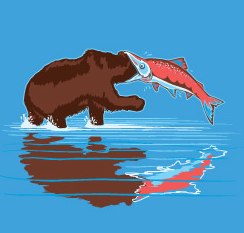
<p><img alt="GE Salmon" class="alignnone" height="233" src="../kahea/kahea/images/20100907-cmfcwkwgaxxb8ww6y39yduus6m.jpg" title="GE Salmon" width="244" /></p>
<p>They came for our taro. Is it any surprise that fish is next on the list? Today, federal officials in the U.S. are considering approval of the first genetically modified fish. GMO-salmon. Ick.</p>
<p><a href="http://www.salmonaresacred.org/">Salmon are sacred</a>. It’s time to show our solidarity for indigenous peoples, first nations, and fishing and nearshore communities the world over. We’re a fish and poi culture, and we’ve got to be concerned about genetic modification of native species. Genetic modification is a part of a broken industrial food system that just doesn’t work. It isn’t serving communities, farmers, fishers, or consumers. We want sovereignty… over what’s on our plates. And we’re saying no to untested, unlabeled GMO foods.</p>
<p><i>From our friends at Food and Water Watch:</i></p>
<p>Franken-Fish  have won the race to be the first genetically engineered animal  approved for human consumption. The aquaculture industry has genetically  engineered a fish that grows at twice the normal rate, so they can get  it to market sooner and make more money.</p>
<p>The scary thing is, the FDA doesn’t  do its own testing of genetically engineered animals, it relies on  information provided by the company that wants approval. And because GE  salmon are being considered as a new animal drug, the process isn’t  focused on what happens to people who eat genetically engineered  animals. So on top of the health concerns posed by raising salmon in  crowded factory fish farms that rely on antibiotics and other chemicals,  the FDA could be adding the unknown risks of GE salmon to the mix.</p>
<p>The FDA is the same agency that’s in  charge of overseeing the egg industry, and we see how well they’ve done  that job. The FDA does not have the capacity to ensure the safety of  food that is not genetically engineered, they certainly should not be in  charge of allowing the first GE animal into our food supply.</p>
<p>We’ve got just 12 days until the FDA  takes formal steps to approve GE salmon, so it’s up to us to demand that  President Obama direct the FDA to reject this request.</p>
<p>Take action to stop this mutant fish from reaching your plate:<br /><a href="http://salsa.democracyinaction.org/dia/track.jsp?v=2&amp;c=qwgo1LSpV3PzOarLqnTqPdMp17nmvY59" target="_blank">http://action.foodandwaterwatch.org/p/dia/action/public/?action_KEY=4693</a></p>
<p>(Illustration at top is by the talented Glenn Jones at threadless.com. His GE Salmon shirt is now sold out!)</p>
<!--adcode-->
<div align="center" class="adcode" style="text-align: left; ">
<script type="text/javascript">// <![CDATA[
google_ad_client = "pub-3443918307802676";
google_ad_output = "js";
google_feedback = "on";
google_max_num_ads = "4";
google_ad_width = 336;
google_ad_height = 280;
google_ad_format = "336x280_as";
google_image_size = "336x280";
google_ad_type = "text,flash,html";
google_ad_channel ="7770228814+3633280292+7401333398+7453468586+5219268225";
var color_bg = 'ffffff';
var color_text = '000000';
var color_link = '265E15';
var color_border = 'ffffff';
var color_url = '265E15';

google_analytics_domain_name = "none";
// ]]></script>
<script src="http://pagead2.googlesyndication.com/pagead/show_ads.js" type="text/javascript"></script>
</div>
<div></div>
<!--/adcode-->]]></content:encoded>
    <dc:publisher>No publisher</dc:publisher>
    <dc:creator>Miwa</dc:creator>
    <dc:rights></dc:rights>
    
      <dc:subject>ocean protection</dc:subject>
    
    
      <dc:subject>gmo</dc:subject>
    
    
      <dc:subject>activism</dc:subject>
    
    
      <dc:subject>fisheries</dc:subject>
    
    
      <dc:subject>Aquaculture</dc:subject>
    
    <dc:date>2010-09-07T23:15:00Z</dc:date>
    <dc:type>Blog Entry</dc:type>
  </item>


  <item rdf:about="https://kahea.org/blog/no-public-speaking-allowed">
    <title>No Public Speaking Allowed?</title>
    <link>https://kahea.org/blog/no-public-speaking-allowed</link>
    <description></description>
    <content:encoded xmlns:content="http://purl.org/rss/1.0/modules/content/"><![CDATA[<script type="text/javascript" src="http://s0.wp.com/wp-content/plugins/adverts/adsense.js?m=1268755324g&1"></script><p>We attended the Honolulu <a href="http://blog.kahea.org/2010/08/05/that-deafness-its-only-temporary/">scoping meeting on the Navy&#8217;s planned expansion of sonar and underwater munitions testing and training activities</a> two weeks ago. We&#8217;re still working on processing the information and our thoughts about the process. In the meantime, we thought we&#8217;d share these thoughts from Uncle Jim on Moku o Keawe about their experience in Hilo:</p>
<p>From Uncle Jim Albertini:</p>
<blockquote><p>Tonight&#8217;s (8/26/10) EIS Scoping Meeting on Navy expansion plans for Hawaii and the Pacific was more hardball than the Marines similar meeting of 2 days ago. (Then again, at the Marines meeting we had retired Marine Sergeant Major, Kupuna Sam Kaleleiki, to open the path with a pule and the initial public testimony.)</p>
<p>The Navy EIS personnel weren&#8217;t nearly as respectful of the right to public speaking and the community being able to hear each others concerns.&#160; Some of the Navy team were downright arrogant, insulting and contemptuous.&#160; Initially the Navy wasn&#8217;t going to allow us to bring our portable sound system into the Hilo H.S. cafeteria to hold a citizen public hearing.&#160; Finally with police presence brought in, the Navy yielded the last hour of the planned 4-8PM event to our citizen hearing.</p>
<p>Some of the Navy EIS team were blatantly rude in not listening to community speakers and carried on their own conversations.&#160; Before the public testimony, we invited all present to join hands in a pule and asked for mutual respect, and open minds and hearts.</p>
<p>The Navy refused to have any of their personnel take notes to make the public comments part of the official record of scoping concerns.&#160; Community people were very respectful of the Navy personnel as human beings, but the aloha spirit wasn&#8217;t returned by many of the Navy people present.&#160; Too bad.</p>
<p>Many of the Navy people were hard set to their format. Tour the science fair stations, and&#160; If you wanted to comment, put it in writing or type it into a computer.&#160; We were told over and over.&#160; This is not a public hearing. No public speaking is allowed.</p></blockquote>

<!--adcode-->
<div align="center" style="padding-top: 5px; text-align: left;" class="adcode">
<script type="text/javascript"><!--
google_ad_client = "pub-3443918307802676";
google_ad_output = "js";
google_feedback = "on";
google_max_num_ads = "4";
google_ad_width = 336;
google_ad_height = 280;
google_ad_format = "336x280_as";
google_image_size = "336x280";
google_ad_type = "text,flash,html";
google_ad_channel ="7770228814+6875057225+7401333398+7453468586+8921623278+7814133392";
var color_bg = 'ffffff';
var color_text = '000000';
var color_link = '265E15';
var color_border = 'ffffff';
var color_url = '265E15';

google_analytics_domain_name = "none";
//--></script><script type="text/javascript" src="http://pagead2.googlesyndication.com/pagead/show_ads.js"></script></div>
<div style="clear: both"><br /></div>
<!--/adcode-->
									]]></content:encoded>
    <dc:publisher>No publisher</dc:publisher>
    <dc:creator>Miwa</dc:creator>
    <dc:rights></dc:rights>
    
      <dc:subject>NWHI</dc:subject>
    
    
      <dc:subject>Northwest Hawaiian Islands</dc:subject>
    
    
      <dc:subject>activism</dc:subject>
    
    
      <dc:subject>land and cultural rights</dc:subject>
    
    
      <dc:subject>militarization</dc:subject>
    
    
      <dc:subject>military toxics</dc:subject>
    
    
      <dc:subject>navy</dc:subject>
    
    
      <dc:subject>ocean protection</dc:subject>
    
    
      <dc:subject>whales</dc:subject>
    
    <dc:date>2010-09-07T21:24:34Z</dc:date>
    <dc:type>Blog Entry</dc:type>
  </item>


  <item rdf:about="https://kahea.org/blog/exempt-it-al">
    <title>Reading:  Environment Hawai'i, August Issue</title>
    <link>https://kahea.org/blog/exempt-it-al</link>
    <description></description>
    <content:encoded xmlns:content="http://purl.org/rss/1.0/modules/content/"><![CDATA[<script type="text/javascript" src="http://s0.wp.com/wp-content/plugins/adverts/adsense.js?m=1253160243g&1"></script><p>We got our August issue of the excellent Environment Hawai&#8217;i in the mail the other day!</p>
<p>On DAR&#8217;s proposed list of activities that they believe <a href="http://blog.kahea.org/2010/08/04/exemptions-gone-wild/">should be exempted from doing environmental assessment</a>, they write, &#8220;DAR&#8217;s proposed list appears to exempt every type of permit and license issued by the division.&#8221; Including live rock and coral collecting permits and all permits for Papahanaumokuakea in the Northwestern Hawaiian Islands.</p>
<p>There is also great coverage of Waimanalo Gulch violations and wet-noodle enforcement from the Department of Health, and excellent reporting on this summer&#8217;s WESPAC meetings.</p>
<p>Mahalo to Pat and Teresa for their excellent investigative reporting! You can support Environment Hawai&#8217;i by <a href="http://www.environment-hawaii.org/">subscribing today</a>!</p>

<!--adcode-->
<div align="center" style="padding-top: 5px; text-align: left;" class="adcode">
<script type="text/javascript"><!--
google_ad_client = "pub-3443918307802676";
google_ad_output = "js";
google_feedback = "on";
google_max_num_ads = "4";
google_ad_width = 336;
google_ad_height = 280;
google_ad_format = "336x280_as";
google_image_size = "336x280";
google_ad_type = "text,flash,html";
google_ad_channel ="7770228814+6875057225+7401333398+7453468586+2794543176+5144442595";
var color_bg = 'ffffff';
var color_text = '000000';
var color_link = '265E15';
var color_border = 'ffffff';
var color_url = '265E15';

google_analytics_domain_name = "none";
//--></script><script type="text/javascript" src="http://pagead2.googlesyndication.com/pagead/show_ads.js"></script></div>
<div style="clear: both"><br /></div>
<!--/adcode-->
									]]></content:encoded>
    <dc:publisher>No publisher</dc:publisher>
    <dc:creator>Miwa</dc:creator>
    <dc:rights></dc:rights>
    
      <dc:subject>NWHI</dc:subject>
    
    
      <dc:subject>Northwest Hawaiian Islands</dc:subject>
    
    
      <dc:subject>activism</dc:subject>
    
    
      <dc:subject>environmental justice</dc:subject>
    
    
      <dc:subject>land and cultural rights</dc:subject>
    
    
      <dc:subject>ocean protection</dc:subject>
    
    
      <dc:subject>other</dc:subject>
    
    <dc:date>2010-08-24T00:35:33Z</dc:date>
    <dc:type>Blog Entry</dc:type>
  </item>


  <item rdf:about="https://kahea.org/blog/laughable-public-process-changes-to-conservation-protections">
    <title>Laughable public process: changes to conservation protections</title>
    <link>https://kahea.org/blog/laughable-public-process-changes-to-conservation-protections</link>
    <description></description>
    <content:encoded xmlns:content="http://purl.org/rss/1.0/modules/content/"><![CDATA[<script type="text/javascript" src="http://s0.wp.com/wp-content/plugins/adverts/adsense.js?m=1268666600g&1"></script><p><em> </em></p>
<p><em> </em></p>
<p><em> </em></p>
<div><span style="font-style:normal;"><em> </em>
<div><img src="/kahea/kahea/images/20100817-rhia5cpe1kk7ww35x61f7wrjph.jpg" title="OCCL Hearing Hawaii" height="240" width="584" alt="OCCL Hearing Honolulu" class="alignnone" /></div>
<div></div>
<div><em>From Marti:</em></div>
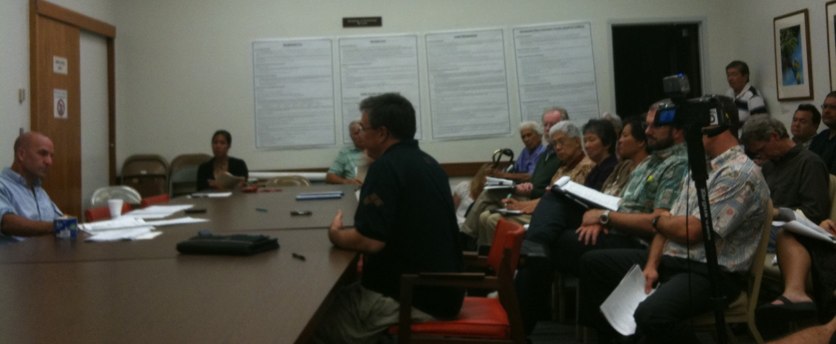
<div><span style="font-style:normal;">On Thursday night, the Office of Conservation and Coastal Lands (OCCL) held a public hearing in Honolulu on their proposed changes to the regulations protecting conservation districts. The first major changes in 15 years&#8230; so it wasn&#8217;t surprising to see the meeting was standing room only.Unfortunately, only a dozen or so of us felt empowered to speak (it was a particularly uncomfortable hearing set-up).
<p>Hearings officer Sam Lemmo, the administrator for OCCL, made a point of assuring the room that the final regulations would definitely be different from what we are seeing tonight based on all of the great input they had been getting. &#160;(Did you just feel that gentle pat on the top of your head? &#160;I did.)</p>
<p>We pressed Sam on when we might actually see the final regulations. Generally speaking, the agenda for the Board of Land and Natural Resources is posted a mere six-days before the Board decides an issue. &#160;Will we only get six days to review the final version of the rules that are supposed to be protecting our conservation lands for at least the next 15 years?</p>
<p>In response, Sam chuckled and said &#8220;good question.&#8221; &#160;The audience laughed. &#160;I laughed, too &#8212; because what do you do when someone laughs in your face? &#160;Despite all the laughter it was a sad moment.</p>
<p>It is sad when regulations as important as these are given but the bare minimum of study and public process. &#160;We are talking about 2 million acres of conservation lands &#8212; our watersheds, nearshore waters&#8230; the important places. &#160;Conservation lands are 51% of the crown and government lands that are supposed to be held in the &#8220;ceded&#8221; lands trust for Native Hawaiians and the people of Hawaii &#8212; we have an obligation to protect these assets.</p>
<p>From what I hear from the old-timers, when these rules were changed 15 years ago, there was a public blue ribbon panel convened to advise the division on improving the regulations. Today, DLNR is unilaterally proposing major revisions. What gives? Where is the expert panel? &#160;The thoughtful study? &#160;The reasoned assessment?</p>
<p>In response to my quote on the need for &#8220;a blue ribbon panel&#8221; in the Star-Advertiser on Thursday, several insiders came forward at the hearing to thank Sam for DLNR&#8217;s history of work on these rule changes that were, in their words, &#8220;a long-time coming.&#8221; So long in coming, in fact, that the public just heard about them. These rules saw the first light of day in July and are expected to be approved before December. &#160;Coincidentally, that&#8217;s right before the Lingle Administration leaves office. &#160;Feels more like a 50-yard dash than a &#8220;long-time coming&#8221; to me.</p>
<p>Both in and out of public hearings, we have heard Sam say, at least 20 times (no exaggeration, I seriously counted), &#8220;Good question, that wasn&#8217;t what I intended&#8221; in response to questions and concerns about the staff&#8217;s proposed changes. I don&#8217;t know about you guys, but if what I write down isn&#8217;t what I meant to say, its usually because I was in a rush and didn&#8217;t take the time to think about the implications&#8230; &#160;welll&#8230; that kind of pondering is exactly what we need right now.</p>
<p>Good changes, bad changes, the bottom line is these changes need more thought. &#160;We should not let the timeline for the end of an administration drive the schedule for amending some of the most important protections in our islands.</p>
<p>Want to feel like you were there? &#160;Here&#160;is a link to<a href="https://docs.google.com/fileview?id=0BwT-rvXHzKhZNzZmZDExNTUtYjEwYi00ODk4LWJkOTgtZmU4ZTYxNzk1ZmZl&hl=en"> notes from the Honolulu public hearing</a> on August 12, 2010.</p>
<p>Want to participate in the process? &#160;<a href="http://salsa.democracyinaction.org/o/2699/signUp.jsp?key=2736">Sign up for KAHEA&#8217;s action alert network</a>, later this week we&#8217;ll send out an easy-to-use comment form by email.</p>
<p></p></span></div>
<p><em> </em></p>
<p></p></span></div>

<!--adcode-->
<div align="center" style="padding-top: 5px; text-align: left;" class="adcode">
<script type="text/javascript"><!--
google_ad_client = "pub-3443918307802676";
google_ad_output = "js";
google_feedback = "on";
google_max_num_ads = "4";
google_ad_width = 336;
google_ad_height = 280;
google_ad_format = "336x280_as";
google_image_size = "336x280";
google_ad_type = "text,flash,html";
google_ad_channel ="7770228814+3633280292+7401333398+7453468586+5144442595+7250744022";
var color_bg = 'ffffff';
var color_text = '000000';
var color_link = '265E15';
var color_border = 'ffffff';
var color_url = '265E15';

google_analytics_domain_name = "none";
//--></script><script type="text/javascript" src="http://pagead2.googlesyndication.com/pagead/show_ads.js"></script></div>
<div style="clear: both"><br /></div>
<!--/adcode-->
									]]></content:encoded>
    <dc:publisher>No publisher</dc:publisher>
    <dc:creator>Marti Townsend</dc:creator>
    <dc:rights></dc:rights>
    
      <dc:subject>Haleakala</dc:subject>
    
    
      <dc:subject>Northwest Hawaiian Islands</dc:subject>
    
    
      <dc:subject>activism</dc:subject>
    
    
      <dc:subject>conservation</dc:subject>
    
    
      <dc:subject>environmental justice</dc:subject>
    
    
      <dc:subject>island sustainability</dc:subject>
    
    
      <dc:subject>land and cultural rights</dc:subject>
    
    
      <dc:subject>mauna kea</dc:subject>
    
    
      <dc:subject>ocean protection</dc:subject>
    
    <dc:date>2010-08-17T07:18:43Z</dc:date>
    <dc:type>Blog Entry</dc:type>
  </item>


  <item rdf:about="https://kahea.org/blog/that-deafness-its-only-temporary">
    <title>That Deafness? It's Only Temporary.</title>
    <link>https://kahea.org/blog/that-deafness-its-only-temporary</link>
    <description></description>
    <content:encoded xmlns:content="http://purl.org/rss/1.0/modules/content/"><![CDATA[<script type="text/javascript" src="http://s0.wp.com/wp-content/plugins/adverts/adsense.js?m=1253160243g&1"></script><p><img src="/kahea/kahea/images/20100805-tnxncjaqxrru1w8wnyd19ypedr.jpg" title="whale" height="162" width="290" alt="" class="alignnone" /></p>
<p>Many of you followed the sonar lawsuit from 2008, in which KAHEA, in partnership with Earthjustice and other local, national and international NGOs, sued the U.S. Navy over its proposed expansion of military exercises around Hawai&#8217;i, including the Northwestern Hawaiian Islands. The State of Hawai&#8217;i, at our urging, also asked the Navy to comply with laws protecting endangered species in Hawai&#8217;i. Not surprising, the Navy refused.</p>
<p>Now, there&#8217;s another round of public scoping hearings for <strong>more sonar and more detonations</strong>. But don&#8217;t worry about those whales. According to the U.S. Navy, the deafness caused by underwater explosions and sonar is <strong>only temporary</strong>.</p>
<p>An <strong>update on U.S. Navy training in Hawaiian waters</strong>, from the <a href="http://www.thehawaiiindependent.com/">Hawaii Independent</a>:</p>
<p>The U.S. Navy announced its intent to prepare an Environmental Impact  Statement (EIS) and Overseas EIS (OEIS) relating to military training  and research, including sonar and detonating explosives, within the  Hawaii-Southern California Training and Testing (HSTT) study area.</p>
<p><strong>Public scoping meetings throughout Hawaii have been scheduled to hear  comments</strong>.  Last year, the federal government issued authorization to the U.S. Navy  to impact whales and dolphins while conducting sonar training exercises  around the main Hawaiian Islands for five years, Environmental News  reported.</p>
<p>The letter of authorization and accompanying rules allow for  injury or death of up to 10 animals of each of 11 species over the five  years covered by the regulations. <strong>The Navy requested authorization under  the Marine Mammal Protection Act because the mid-frequency sound  generated by tactical active sonar, and the sound and pressure generated  by detonating explosives, may affect the behavior of some marine  mammals or cause what the Navy calls &#8220;a temporary loss of their  hearing.&#8221; </strong></p>
<p><strong>Mid-frequency sonar can emit continuous sound well above 235 decibels,  an intensity roughly comparable to a rocket at blastoff</strong>, according to  Environmental News.</p>
<p><strong>The sonar blasts travel across hundreds of miles of  ocean to reveal objects, such as submarines, underwater</strong>.  The National Marine Fisheries Service (NMFS) will be a cooperating  agency in preparation of this EIS and OEIS.  In January 2009, the NMFS&#8217;s ruling stated: &#8220;After reviewing the current  status of the endangered blue whale, fin whale, humpback whale, sei  whale, sperm whale, Hawaiian monk seal, green sea turtle, leatherback  sea turtle, loggerhead sea turtle, and Pacific ridley sea turtle, &#8230;  [Navy training activity in the Hawaii Range Complex] each year for a  five-year period beginning in January, 2009, are likely to adversely  affect but are not likely to jeopardize the continued existence of these  threatened and endangered species under NMFS&#8217;s jurisdiction.&#8221;</p>
<p>While Earth Justice wants the Navy to stop using sonar until it can  avoid serious injury to marine mammals, the environmental group  recommends several things the Navy can do to minimize the harm to marine  life: Impose seasonal and geographical limitations, avoid nursing  areas, ramp sonar up slowly, avoid areas that were created specifically  to protect endangered marine life, create a 25-mile safe haven distance  from shorelines, avoid steep-sloping seamounts that provide important  habitat for many marine species, prohibit testing at night or other  times of low visibility, and adopt protocols similar to those of other  naval forces to minimize the impact on marine wildlife.</p>
<p>The Navy&#8217;s latest proposed action is to conduct training and testing  activities within the at-sea portions of existing Navy training range  complexes around the Hawaiian Islands and off the coast of Southern  California. Training activities, such as <strong>sonar maintenance</strong>, <strong>explosives</strong>,  and <strong>gunnery exercises</strong>, may occur outside of Navy operating and warning  areas.  In 2009, the Navy instituted mitigation measures relating to sonar that  include stationing lookouts, adjusting sonar decibel levels when marine  animals are detected within 200 to 1,000 yards, and increased visual and  aerial surveillance for marine life.  The HSTT study area combines the at-sea portions of the following range  complexes: Hawaii Range Complex, Southern California Range Complex, and  Silver Strand Training Complex. The existing western boundary of the  Hawaii Range Complex is being expanded 60 miles to the west to the  International Dateline.</p>
<p>The HSTT study area also includes the transit  route between Hawaii and Southern California as well as Navy and  commercial piers at Pearl Harbor and in San Diego, CA where sonar may  also be tested.</p>
<p><strong> Public scoping meetings will be held between 4:00 p.m. and 8:00  p.m.</strong></p>
<p>- Tuesday, August 24, 2010, Kauai Community College Cafeteria, 3-1901  Kaumualii Highway, Lihue, HI.<br />
- Wednesday, August 25, 2010, Disabled American Veterans Hall, Weinberg  Hall, 2685 North Nimitz Highway, Honolulu, HI.<br />
- Thursday, August 26, 2010, Hilo High School Cafeteria, 556 Waianuenue  Avenue, Hilo, HI.  6. Friday, August 27, 2010<br />
- Maui Waena Intermediate School Cafeteria,  795 Onehee Avenue, Kahului, HI.</p>
<p>The meetings will consist of an informal, open house  session with informational stations staffed by Navy representatives.  Additional information concerning meeting times is available on the EIS  and OEIS website at <a href="http://www.hawaiisocaleis.com/" target="_blank">http://www.HawaiiSOCALEIS.com</a>.  The scoping process will be used to identify community concerns and  local issues to be addressed in the EIS and OEIS. All comments provided  orally or in writing at the scoping meetings, will receive the same  consideration during EIS and OEIS preparation. <strong>Written comments must be  postmarked no later than September 14 </strong>and should be mailed to: Naval  Facilities Engineering Command, Southwest, 2730 McKean Street, Building  291, San Diego, CA 92136-5198, Attention: Mr. Kent Randall&#8212;HSTT  EIS/OEIS.</p>

<!--adcode-->
<div align="center" style="padding-top: 5px; text-align: left;" class="adcode">
<script type="text/javascript"><!--
google_ad_client = "pub-3443918307802676";
google_ad_output = "js";
google_feedback = "on";
google_max_num_ads = "4";
google_ad_width = 336;
google_ad_height = 280;
google_ad_format = "336x280_as";
google_image_size = "336x280";
google_ad_type = "text,flash,html";
google_ad_channel ="7770228814+6875057225+7401333398+7453468586+2141574685+8810813485+2794543176";
var color_bg = 'ffffff';
var color_text = '000000';
var color_link = '265E15';
var color_border = 'ffffff';
var color_url = '265E15';

google_analytics_domain_name = "none";
//--></script><script type="text/javascript" src="http://pagead2.googlesyndication.com/pagead/show_ads.js"></script></div>
<div style="clear: both"><br /></div>
<!--/adcode-->
									]]></content:encoded>
    <dc:publisher>No publisher</dc:publisher>
    <dc:creator>Miwa</dc:creator>
    <dc:rights></dc:rights>
    
      <dc:subject>Hawaiian Monk Seal</dc:subject>
    
    
      <dc:subject>NWHI</dc:subject>
    
    
      <dc:subject>Northwest Hawaiian Islands</dc:subject>
    
    
      <dc:subject>activism</dc:subject>
    
    
      <dc:subject>fisheries</dc:subject>
    
    
      <dc:subject>military</dc:subject>
    
    
      <dc:subject>military toxics</dc:subject>
    
    
      <dc:subject>ocean protection</dc:subject>
    
    <dc:date>2010-08-05T20:19:32Z</dc:date>
    <dc:type>Blog Entry</dc:type>
  </item>


  <item rdf:about="https://kahea.org/blog/exemptions-gone-wild">
    <title>Exemptions Gone Wild</title>
    <link>https://kahea.org/blog/exemptions-gone-wild</link>
    <description></description>
    <content:encoded xmlns:content="http://purl.org/rss/1.0/modules/content/"><![CDATA[<p>Generally,  under today&#8217;s environmental laws, certain kinds of projects have to do  an environmental review (Like an EIS). Other kinds of projects can be  exempted. The BP oil spill at Deepwater Horizon has been a sobering  reminder of why these kinds of environmental reviews and exemptions are  so critical. (Can you believe <a href="//www.wkrg.com/gulf_oil_spill/spill_cam/">THIS</a> was <a href="http://www.washingtonpost.com/wp-dyn/content/article/2010/05/04/AR2010050404118.html">exempted from EIS</a>?)</p>
<p><img src="/kahea/kahea/images/20100805-chn6n9kdrkk595dcfmkubrm12.jpg" title="bp spill aftermath" height="257" width="388" alt="" class="alignnone" /></p>
<p>Today,  <strong>DLNR is proposing a &#8220;wild laundry list&#8221; of EIS exemptions </strong>for DLNR-managed  lands, from building new roads to chemical herbicides. That&#8217;s 57 pages  (fifty-seven!) of exemptions. Yeesh. We are asking the Office of  Environmental Quality and Control (OEQC) to <strong>send DLNR back to the  drawing board</strong>. If you or your organization is interested in  participating in a group letter to OEQC or just want to know more about  this issue, please contact Marti at marti@kahea.org by Friday morning.</p>
<p><img src="/kahea/kahea/images/20100805-ji1uj9mw7ppk9g6m25g21hwrnm.jpg" title="makena" height="302" width="390" alt="" class="alignnone" /></p>
									]]></content:encoded>
    <dc:publisher>No publisher</dc:publisher>
    <dc:creator>Miwa</dc:creator>
    <dc:rights></dc:rights>
    
      <dc:subject>HEPA</dc:subject>
    
    
      <dc:subject>Haleakala</dc:subject>
    
    
      <dc:subject>NWHI</dc:subject>
    
    
      <dc:subject>Northwest Hawaiian Islands</dc:subject>
    
    
      <dc:subject>activism</dc:subject>
    
    
      <dc:subject>island sustainability</dc:subject>
    
    
      <dc:subject>land and cultural rights</dc:subject>
    
    
      <dc:subject>mauna kea</dc:subject>
    
    
      <dc:subject>ocean protection</dc:subject>
    
    
      <dc:subject>process</dc:subject>
    
    
      <dc:subject>telescopes</dc:subject>
    
    <dc:date>2010-08-05T03:28:47Z</dc:date>
    <dc:type>Blog Entry</dc:type>
  </item>


  <item rdf:about="https://kahea.org/blog/pushing-for-the-protections-monk-seals-and-humans-need">
    <title>Pushing for the protections monk seals (and humans) need</title>
    <link>https://kahea.org/blog/pushing-for-the-protections-monk-seals-and-humans-need</link>
    <description></description>
    <content:encoded xmlns:content="http://purl.org/rss/1.0/modules/content/"><![CDATA[<script type="text/javascript" src="http://s0.wp.com/wp-content/plugins/adverts/adsense.js?m=1253160243g&1"></script><p><em>From Marti:<a href="/kahea/kahea/images/monkseal-on-beach.jpeg/image_view_fullscreen"><img src="/kahea/kahea/images/monkseal-on-beach.jpeg" title="monkseal-on-beach" height="224" width="300" alt="" class="alignright size-medium wp-image-299" /></a><br /></em></p>
<p>Like a glove across the face, KAHEA and the Center for Biological Diversity sent a <a href="https://docs.google.com/fileview?id=0BwT-rvXHzKhZMWJhYTdlYTctMzQ5ZS00MDc3LTg0NTItZDlmOTM1MWM2YmU5&hl=en">Notice of Intent to Sue</a> yesterday warning federal regulators to expedite the critical habitat designation for Hawaiian monk seals&#8230; or else. &#160;Critical habitat is the backbone of the Endangered Species Act. &#160;It is the mechanism for shepherding species back from the verge of extinction. Over two years ago, we petitioned the National Marine Fisheries Service to expand the critical habitat designation for the highly endangered Hawaiian monk seal. &#160;And NMFS agreed the seal needed more habitat to thrive. &#160;Yet, more than a year since they agreed with us, NMFS is not any closer to protecting vitally important nearshore areas and deepwater foraging grounds for the seal.</p>
<p>Not surprising, in that year, Hawaiian monk seals have only slipped closer to extinction with a 4% annual decline. In 2009, monk seals had the lowest pupping rate in the past 10 years, with every location in the Northwestern Hawaiian Islands experiencing declines. In 2009, only 119 seal pups were born in the Northwestern Hawaiian Islands, compared with 138 in 2008. &#160;But in the Main Hawaiian Islands, birth rates seem more promising with 15 monk seal pups born including six pups on Moloka&#8217;i, five on Kaua&#8217;i, and two each on O&#8217;ahu and Maui. &#160;The federal government must act now to update the current protections for Hawaiian monk seals to ensure deepwater foraging areas of the NWHI are protected, as well as the areas being re-populated in the main islands.</p>
<p>Protecting this habitat for monk seals will also protect these areas for humans, too. &#160;Subsistence fishers and monk seals benefit from the same protections &#8212; where monk seals are protected, shoreline and nearshore non-commercial fishers are also protected. &#160;By expanding critical habitat for monk seals, we can ensure subsistence fishing grounds are not built over by hotels, highways, and industrial fish farms.</p>

<!--adcode-->
<div align="center" style="padding-top: 5px; text-align: left;" class="adcode">
<script type="text/javascript"><!--
google_ad_client = "pub-3443918307802676";
google_ad_output = "js";
google_feedback = "on";
google_max_num_ads = "4";
google_ad_width = 336;
google_ad_height = 280;
google_ad_format = "336x280_as";
google_image_size = "336x280";
google_ad_type = "text,flash,html";
google_ad_channel ="7770228814+6875057225+7401333398+7453468586+7814133392+6836619467";
var color_bg = 'ffffff';
var color_text = '000000';
var color_link = '265E15';
var color_border = 'ffffff';
var color_url = '265E15';

google_analytics_domain_name = "none";
//--></script><script type="text/javascript" src="http://pagead2.googlesyndication.com/pagead/show_ads.js"></script></div>
<div style="clear: both"><br /></div>
<!--/adcode-->
									]]></content:encoded>
    <dc:publisher>No publisher</dc:publisher>
    <dc:creator>Marti Townsend</dc:creator>
    <dc:rights></dc:rights>
    
      <dc:subject>Hawaiian Monk Seal</dc:subject>
    
    
      <dc:subject>Northwest Hawaiian Islands</dc:subject>
    
    
      <dc:subject>conservation</dc:subject>
    
    
      <dc:subject>ocean protection</dc:subject>
    
    <dc:date>2010-07-31T08:54:43Z</dc:date>
    <dc:type>Blog Entry</dc:type>
  </item>


  <item rdf:about="https://kahea.org/blog/a-little-explanation">
    <title>A little explanation.</title>
    <link>https://kahea.org/blog/a-little-explanation</link>
    <description></description>
    <content:encoded xmlns:content="http://purl.org/rss/1.0/modules/content/"><![CDATA[<p><img src="/kahea/kahea/images/20100512-gppc656h6i9sx7sa8jyk5rdxa2.jpg" title="ulua" height="298" width="389" alt="" class="alignnone" /></p>
<p><em>From Miwa:</em><br /><em><br />
I wrote the little explanation below the other day to  Uncle Bill Aila, Jr. in response to an email from him. Though it was  written for him, I thought I would share it here on our blog, as others  may have questions about KAHEA&#8217;s support of Na Koa and Koani Foundation  in their request for intervention on World Heritage Site designation for  the Northwestern Hawaiian Islands:</em></p>
<p>First and foremost, KAHEA  fully supports legal protections promulgated in the State Refuge and the  Monument, <strong>including</strong> the prohibition on commercial fishing within  50 miles of the islands. We believe deeply in a vision of <em>full</em> conservation of the NWHI, as it represents a significant place of refuge  for cultural practice, for native endangered species, and for some of  the last predator-dominated reefs remaining on the planet.</p>
<p>However,  as you know well (!), we have had, and continue to have, some deep  concerns about management in the NWHI by the state and feds.&#160; Including:</p>
<p>1)  Lack of meaningful prioritization for  activities in the NWHI, or  of analysis of cumulative impacts (taking  into account past  activity&#8211;including legacy over-exploitation and  military activity)<br />
2) Weak and disorganized permitting &#8211; &#8220;unified&#8221;  permit process not  really very unified in implementation<br />
3) No  enforcement plan, failure to push for  accountability/mitigations/appropriate limits on military activity in  the NWHI<br />
4)  Lack of funding/focus on cultural access or study<br />
5) No public  advisory entity established for Monument and limited   venues/opportunities for public participation on decision-making<br />
6)  Lack of collaboration:&#160; Monument Management Board has not met in nearly  six months? Multi-agency commitment to integrated ecosystem management  getting lost on turf wars.</p>
<p>At the heart of this, is an  exhibited inability for the co-trustees to collaborate effectively.  Officials on the Federal side have acknowledged &#8220;some deep conflicts&#8221;  which the Federal agencies are &#8220;struggling to resolve.&#8221; Though many are  eager to take credit for the protections in place for the NWHI,  implementation has lacked the political will to &#8220;make it work.&#8221;</p>
<p>We  support Na Koa and Koani Foundation in their request for intervention  for the following reasons:</p>
<div>
<div>
<p>In many communities, the decision to  pursue a WHS designation comes only after years of conversation, debate,  struggle and consultation. We are concerned that Native Hawaiian  consultation on the WHS proposal was indeed inadequate, conveying  unified support, when this is not in fact the case.</p>
<p>Further,  World Heritage designation does not offer any additional enforceable  protections for the NWHI. Indeed, over 30 World Heritage Sites are  currently threatened with de-listing, due to poor management by those in  charge, including the Belize Barrier Reef System and the Galapagos  Islands. In an article written this past February, Goldman Prize winner  John Sinclair heavily criticized Australian officials for neglecting  conservation management for his beloved Fraser Island following its  World Heritage designation, in favor of facility upgrades, and  recreation management (e.g. widening roads) at the expense of &#8220;natural  resource management, &#8212; environmental monitoring of wildlife and  ecosystems, fire management, weed control, and quarantine.&#8221;</p>
<p>In  many cases, this designation is used to promote tourism to a site (See <a oncontextmenu="mugicRightClick(this);" href="http://www.expedia.com/daily/sustainable_travel/world_heritage/default.asp" target="_blank" onclick="return mugicPopWin(this,event);">http://www.expedia.com/daily/sustainable_travel/world_heritage/default.asp</a>),  which ironically increases the tourism impacts to the site intended for  protection.</p>
<p>What World Heritage designation <em>does</em> offer  is prestige and publicity. Prestige and publicity is not a need for the  NWHI, as a great deal of public attention has already been placed on the  protection of the NWHI. Indeed, a TIME magazine&#8217;s feature Earth Day  article (Bryan Walsh) on oceans just last week noted NWHI protections as  hopeful action in an otherwise pretty dismal picture of world-wide  ocean resources management.</p>
<p>What is needed is not more attention  or prestige. What is needed is accountable, integrated and cooperative  management that puts the resource and the rightholders first.</p>
<p>Let&#8217;s  do that&#8211;let&#8217;s get <em>there</em>&#8211;and we&#8217;ll have a place that can really  be held up as an example to the world of how ocean conservation that  strongly protects cultural practice can be done well.&#160; This is our hope,  and vision ahead of our efforts.</p>
</div>
</div>
									]]></content:encoded>
    <dc:publisher>No publisher</dc:publisher>
    <dc:creator>Miwa</dc:creator>
    <dc:rights></dc:rights>
    
      <dc:subject>NWHI</dc:subject>
    
    
      <dc:subject>Northwest Hawaiian Islands</dc:subject>
    
    
      <dc:subject>activism</dc:subject>
    
    
      <dc:subject>conservation</dc:subject>
    
    
      <dc:subject>ocean protection</dc:subject>
    
    
      <dc:subject>world heritage</dc:subject>
    
    <dc:date>2010-05-12T00:27:36Z</dc:date>
    <dc:type>Blog Entry</dc:type>
  </item>


  <item rdf:about="https://kahea.org/blog/antifouling-causes-paler-fish">
    <title>Antifouling Causes Paler Fish</title>
    <link>https://kahea.org/blog/antifouling-causes-paler-fish</link>
    <description></description>
    <content:encoded xmlns:content="http://purl.org/rss/1.0/modules/content/"><![CDATA[<script type="text/javascript" src="http://s0.wp.com/wp-content/plugins/adverts/adsense.js?m=1253160243g&1"></script><p><em>From Marti:</em></p>
<p>Study in Sweden found that new antifouling chemical medetomidine (used to prevent the  buildup of barnacles, seaweed/marine organisms on the cages/nets of open  water fish farms) causes paler fish, affecting the skin cells that  contain dark pigment. &#160;It also appears to affect a detoxifying enzyme in  the fish&#8217;s livers, which could result in lessened ability to filter  environmental toxins (like PCBs or mercury!)</p>
<p>Looks like, in the race to replace TBT to keep fish farm nets and boat bottoms critter-free, it&#8217;s back to the drawing board.</p>
<p>See full article at:&#160; <a href="http://www.thefishsite.com/fishnews/12238/antifouling-causes-paler-fish" target="_blank">http://www.thefishsite.com/fishnews/12238/antifouling-causes-paler-fish</a></p>

<!--adcode-->
<div align="center" style="padding-top: 5px; text-align: left;" class="adcode">
<script type="text/javascript"><!--
google_ad_client = "pub-3443918307802676";
google_ad_output = "js";
google_feedback = "on";
google_max_num_ads = "4";
google_ad_width = 336;
google_ad_height = 280;
google_ad_format = "336x280_as";
google_image_size = "336x280";
google_ad_type = "text,flash,html";
google_ad_channel ="7770228814+6875057225+7401333398+7453468586+5219268225";
var color_bg = 'ffffff';
var color_text = '000000';
var color_link = '265E15';
var color_border = 'ffffff';
var color_url = '265E15';

google_analytics_domain_name = "none";
//--></script><script type="text/javascript" src="http://pagead2.googlesyndication.com/pagead/show_ads.js"></script></div>
<div style="clear: both"><br /></div>
<!--/adcode-->
									]]></content:encoded>
    <dc:publisher>No publisher</dc:publisher>
    <dc:creator>Miwa</dc:creator>
    <dc:rights></dc:rights>
    
      <dc:subject>Aquaculture</dc:subject>
    
    
      <dc:subject>NWHI</dc:subject>
    
    
      <dc:subject>Northwest Hawaiian Islands</dc:subject>
    
    
      <dc:subject>boats</dc:subject>
    
    
      <dc:subject>nets</dc:subject>
    
    
      <dc:subject>ocean protection</dc:subject>
    
    
      <dc:subject>oceans</dc:subject>
    
    <dc:date>2010-05-11T20:15:45Z</dc:date>
    <dc:type>Blog Entry</dc:type>
  </item>


  <item rdf:about="https://kahea.org/blog/thousands-march-against-fish-farms-in-b-c">
    <title>Thousands March Against Fish Farms in B.C.</title>
    <link>https://kahea.org/blog/thousands-march-against-fish-farms-in-b-c</link>
    <description></description>
    <content:encoded xmlns:content="http://purl.org/rss/1.0/modules/content/"><![CDATA[<p><img src="/kahea/kahea/images/20100510-qhn36ei56hhgfqfh2p51as2rt5.jpg" title="fish farm protest" height="201" width="357" alt="" class="alignnone" /></p>
<p>Close to 5,000 people gathered this past weekend, the culmination of a 500 km march, led by biologist Alexandra Morton, to protest open ocean fish farms and the impacts they are having on wild fish in British Columbia. As we open our doors to open ocean farms for ahi in Hawai&#8217;i, do we have something to learn from their experience in B.C.?</p>
<p>See video: <a href="http://www.globaltvbc.com/video/index.html?releasePID=tVSow1MygokzZOHDBa99s317z8BmiyTn">http://www.globaltvbc.com/video/index.html?releasePID=tVSow1MygokzZOHDBa99s317z8BmiyTn</a></p>
<p><em>From Dr. Neil Frazer, a UH Professor (SOEST) born and raised in British Columbia:<br /></em></p>
<p>In  BC, native peoples (called &#8220;First Nations&#8221;) are very angry with farms.  Near farms they have lost their subsistence fishing, their salmon and  clams.</p>
<p>Many  BC tourism companies are very unhappy because sportfish and wildlife  have greatly declined near farms. Farmers have shot many marine mammals.</p>
<p>Salmon  farming in BC is controlled by two large Norwegian companies: Marine  Harvest and Cermaq.</p>
<p>First  Nations from BC have gone to Norway twice to plead with the Norwegians  to move their farms. Imagine native Hawaiians having to fly to Norway  some day to plead for removal of farms.</p>
<p>Many  lawsuits against sea-cage farmers are now in the BC courts. Solid  citizens are marching down the highways in protest. It&#8217;s a mess.</p>
<p>Problems  with sea-cage farms are not confined to BC. Many people in other  countries are very unhappy with sea-cage fish farms.</p>
<p>Hawaii  should look into it. Why import the mistakes of other countries?</p>
									]]></content:encoded>
    <dc:publisher>No publisher</dc:publisher>
    <dc:creator>Miwa</dc:creator>
    <dc:rights></dc:rights>
    
      <dc:subject>Aquaculture</dc:subject>
    
    
      <dc:subject>activism</dc:subject>
    
    
      <dc:subject>fish</dc:subject>
    
    
      <dc:subject>ocean protection</dc:subject>
    
    <dc:date>2010-05-10T23:55:23Z</dc:date>
    <dc:type>Blog Entry</dc:type>
  </item>


  <item rdf:about="https://kahea.org/blog/state-finally-getting-it-right-for-northwestern-hawaiian-islands-ish">
    <title> State finally getting it right for Northwestern Hawaiian Islands... -ish.</title>
    <link>https://kahea.org/blog/state-finally-getting-it-right-for-northwestern-hawaiian-islands-ish</link>
    <description></description>
    <content:encoded xmlns:content="http://purl.org/rss/1.0/modules/content/"><![CDATA[<div><img src="/kahea/kahea/images/20100501-1r37xw37ihy6995gu19yw3nqmi.jpg" title="honu" height="178" width="301" alt="" class="alignnone" /></div>
<div><em>From Marti:</em></div>
<div>
<p>Last week,  the Board of Land and Natural Resources <a href="http://blog.kahea.org/2010/04/20/admit-it-we-were-right-all-along/">held a special meeting to  consider several permit applications</a> from HIMB researchers for  activities in the Northwestern Hawaiian Islands, Papah&#257;naumoku&#257;kea.  &#160;After several years of public testimony at every permit hearing &#8212; and  even finally, a <a href="http://blog.kahea.org/2009/07/23/kahea-lawsuit-makes-headlines/">lawsuit</a>! &#8211;&#160;<strong>the Land Board and its staff finally  admitted: a cumulative impact assessment IS needed to understand the  affects of harmful human activity on this extremely fragile place BEFORE  permits are issued to allow prohibited activities</strong>. &#160;Hallelujah!</p>
<p>Unfortunately, knowing you were wrong and getting it right are not  the same thing.</p>
<p>At the meeting, staff gave a very technical  presentation about past permitted activities, how they are documented,  and what the likely affects are. &#160;Then representatives from the  applicants &#8212; Hawai&#8217;i Institute of Marine Biology (HIMB) &#8212; testified to  studies they have conducted on themselves to assess the impact they are  (not) having on the environment. &#160;These are good and noble acts that  should be continued, but do not get at the heart of the issue over the  issuance of permits for taking species, dumping waste water, anchoring,  constructing, and dredging activities in the largest NO-TAKE marine  reserve in Hawai&#8217;i. These activities have the potential to harm the very  thing that is trying to be studied (and ostensibly saved).&#160; Yet? Still  no cumulative impact assessment. Still no environmental assessment.</p>
<p>The researchers and the staff obviously have some information about  the impacts of human activities in the NWHI. &#160;Why not put that together  into an environmental impact statement and release it for public  comment?</p>
<p>Permits are required because the activities requested are&#160;<strong>prohibited</strong>.  Permission is to be given for prohibited activities when they are  necessary for conservation, management and cultural perpetuation. This  is at the heart of a &#8220;permit&#8221; system.</p>
<p>The issue: We are&#160;<strong>supposed</strong> to have a public process to  evaluate what activities are really needed, and balance them against the  cumulative impacts. How can we do this without the legally required  environmental assessment (EA)? Or for that matter, without a public  process?</p>
<p>All the while granting of permits continues to be driven by  availability of grant/Federal dollars, rather than the actual&#160;<em>need</em> for  the activity.</p>
</div>
<p>Today, decisions for the Monument are being  made in the dark&#8211;and it shows.&#160; We continue to ask:&#160; open up the  Monument to transparent, accountable decision making for this public  trust. Hold public meetings of the Monument Management Board, where  permitting decisions can be made in the light of day. Really, what is  there to hide?</p>
<div><img src="/kahea/kahea/images/20100501-nut3q1gjbjsnrmbghcwq53dxhx.jpg" alt="" height="238" width="325" title="FFS access map" /></div>
									]]></content:encoded>
    <dc:publisher>No publisher</dc:publisher>
    <dc:creator>Miwa</dc:creator>
    <dc:rights></dc:rights>
    
      <dc:subject>NWHI</dc:subject>
    
    
      <dc:subject>Northwest Hawaiian Islands</dc:subject>
    
    
      <dc:subject>conservation</dc:subject>
    
    
      <dc:subject>ocean protection</dc:subject>
    
    <dc:date>2010-05-01T03:39:04Z</dc:date>
    <dc:type>Blog Entry</dc:type>
  </item>


  <item rdf:about="https://kahea.org/blog/reading-edible-hawaiian-islands">
    <title>Reading: Edible Hawaiian Islands</title>
    <link>https://kahea.org/blog/reading-edible-hawaiian-islands</link>
    <description></description>
    <content:encoded xmlns:content="http://purl.org/rss/1.0/modules/content/"><![CDATA[<p><img src="/kahea/kahea/images/20100429-gpg4h54cx3w99381akit1drr6f.jpg" title="Edible Hawaiian Islands" height="348" width="261" alt="" class="alignnone" /></p>
<p>This issue of <a href="http://www.ediblecommunities.com/hawaiianislands/">Edible Hawaiian Islands</a> is devoted to fish, fishing, and fisheries. How fish gets from the sea to your plate, and everything in between.</p>
<p>Some interesting ideas on the future for &#8220;sustainable&#8221; fisheries by Jon Letman, and on raising fish &#8220;Loko&#8221; style by Rob Parsons.</p>
<p>We&#8217;re liking: Rob&#8217;s interview with Michael Kumuhauoha Lee, of the &#8216;Ewa Beach Limu Restoration Project&#8211;</p>
<blockquote><p>Lee believes that modern Western aquaculture systems run into difficulties by trying to maximize dollar output, and by not looking at how true natural resource systems of abundance are created. &#8220;It is the Hawaiian belief,&#8221; says Lee, &#8220;that everything is a living being. The outer fishpond rock walls are like the skin&#8211;they are porous and allow zoo-plankton to pass through. Plankton and algae are among the most basic life forms.</p>
<p>&#8220;The fresh-water springs are like a circulatory system,&#8221; says Lee. &#8220;It is essential to set up a diverse biosphere, and to plant and seed the limu to attract the fish into the pond. Don&#8217;t disregard the vitality of the elemental systems, the safeguards and the knowledge that is already here.&#8221;</p></blockquote>
									]]></content:encoded>
    <dc:publisher>No publisher</dc:publisher>
    <dc:creator>Miwa</dc:creator>
    <dc:rights></dc:rights>
    
      <dc:subject>Aquaculture</dc:subject>
    
    
      <dc:subject>conservation</dc:subject>
    
    
      <dc:subject>food</dc:subject>
    
    
      <dc:subject>food sovereignty</dc:subject>
    
    
      <dc:subject>land and cultural rights</dc:subject>
    
    
      <dc:subject>ocean protection</dc:subject>
    
    <dc:date>2010-04-30T10:04:31Z</dc:date>
    <dc:type>Blog Entry</dc:type>
  </item>


</rdf:RDF>