<?xml version="1.0" encoding="utf-8" ?>
<rdf:RDF xmlns:rdf="http://www.w3.org/1999/02/22-rdf-syntax-ns#" xmlns:dc="http://purl.org/dc/elements/1.1/" xmlns:syn="http://purl.org/rss/1.0/modules/syndication/" xmlns="http://purl.org/rss/1.0/">


<channel rdf:about="https://kahea.org/search_rss">
  <title>KAHEA</title>
  <link>https://kahea.org</link>

  <description>
    
            These are the search results for the query, showing results 1 to 1.
        
  </description>


  <image rdf:resource="https://kahea.org/logo.png"/>

  <items>
    <rdf:Seq>
      
        <rdf:li rdf:resource="https://kahea.org/blog/haleakalaahhhhh-wasssps"/>
      
    </rdf:Seq>
  </items>

</channel>


  <item rdf:about="https://kahea.org/blog/haleakalaahhhhh-wasssps">
    <title>HaleakalaAHHHHH! WASSSPS!</title>
    <link>https://kahea.org/blog/haleakalaahhhhh-wasssps</link>
    <description></description>
    <content:encoded xmlns:content="http://purl.org/rss/1.0/modules/content/"><![CDATA[<p><em>From Melissa:</em></p>
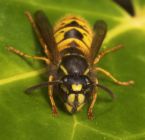
<p>Haleakala National Park is being invaded by Yellowjacket wasps as you are reading this blog.</p>
<blockquote><p>Invading wasps in Haleakala National Park, which usually make nests the size of a football, have grown nests &#8220;the size of a &#8217;57 Buick,&#8221; according to a new study.<img src="/kahea/kahea/images/937ce17ddf705a8c.jpg" title="937ce17ddf705a8c" height="140" width="145" alt="937ce17ddf705a8c" class="alignright size-full wp-image-999" /></p>
<p>Research just published in the Proceedings of the National Academy of Sciences shows a fascinating interplay in which the invaders are being shaped by their new environment, just as they are drastically changing the native ecosystem. Not only do the aliens &#8212; western yellowjacket wasps, Vespula pensylvanica &#8212; take advantage of the lack of cold winters to grow huge nests, they have taken to eating vertebrate meat as well as other insects, geckos and native shearwaters.</p>
<p>Erin Wilson, who has just completed a doctorate in biology at the University of California, San Diego, studied the yellowjackets at Haleakala and Hawaii Volcanoes national parks in 2006 and 2007. The yellowjackets have been a problem in the parks for years, but their new diet and their numbers were a surprise.</p>
<p>In a telephone interview from Acadia National Park in Maine, where she is vacationing, Wilson said yellowjackets like high, lonely places.</p>
<p>They are hard to find, which is why the size of the nests &#8212; up to 600,000 individuals compared with a few thousand in a usual nest &#8212; escaped attention.</p>
<p>Along with Argentinian ants, the yellowjackets are among the most dangerous alien arthropod invaders of the park.</p>
<p>&#8220;It&#8217;s not just what they&#8217;re killing,&#8221; Wilson said. &#8220;They&#8217;re also collecting great amounts of nectar, drawing down the resources for anything else that might want to feed on it, whether it&#8217;s native insects or birds like the Hawaiian honeycreepers.&#8221;</p>
<p>The wasps do not attack and kill vertebrates. They scavenge the protein-rich remains of dead animals. But even that could help unbalance the native ecosystem by usurping the food supply for native scavengers, like the pueo.</p></blockquote>
<p>To read full story, click <a href="http://www.honoluluadvertiser.com/article/20090728/BREAKING01/90728008/Invasive+yellowjacket+wasps+altering+Haleakala+ecosystem">here</a></p>
									]]></content:encoded>
    <dc:publisher>No publisher</dc:publisher>
    <dc:creator>melissakolonie</dc:creator>
    <dc:rights></dc:rights>
    
      <dc:subject>Haleakala</dc:subject>
    
    
      <dc:subject>conservation</dc:subject>
    
    
      <dc:subject>environmental justice</dc:subject>
    
    
      <dc:subject>invasive</dc:subject>
    
    
      <dc:subject>island sustainability</dc:subject>
    
    
      <dc:subject>wasp</dc:subject>
    
    
      <dc:subject>yellowjacket</dc:subject>
    
    <dc:date>2009-07-29T01:26:28Z</dc:date>
    <dc:type>Blog Entry</dc:type>
  </item>


</rdf:RDF>